Document Checklist for Buying an Open Plot in Telangana
Which documents to verify before buying an open plot in Telangana — sale deed, link documents, EC, layout approval, RERA registration, pattadar passbook.
Buying an open plot in Telangana is safest when you treat it as a paperwork exercise first and a site visit second. Every legitimate plot leaves a documented trail across the state's registration, planning and land-records systems. This checklist explains which documents to ask for, what each one actually proves, and where to verify it independently.
Sale deed and link documents
The sale deed is the core document. Once it is executed and registered at the jurisdictional Sub-Registrar Office (SRO) under the Registration Act, 1908, it becomes the primary evidence that ownership of the plot has been transferred to you. An unregistered agreement of sale, however detailed, does not transfer title to immovable property.
Before your own deed is drafted, examine the seller's registered sale deed and the link documents — the earlier registered deeds through which the property passed from one owner to the next. Together they form the title chain. You are checking that each transfer connects cleanly to the previous one: same survey number, same plot number, same extent, and a seller in each deed who was the buyer in the one before. Gaps, mismatched extents or missing generations in the chain are the classic warning signs. Certified copies of registered documents can be obtained from the Sub-Registrar Office if the seller cannot produce originals of older links.
Encumbrance certificate (EC)
The encumbrance certificate is a statement of registered transactions affecting the property over a period you specify — sales, mortgages, gifts, releases and similar entries recorded at the SRO. In Telangana you can search for and obtain an EC online through the registration department's portal at registration.telangana.gov.in, using the document or property details; the online search requires registering and logging in on the portal, and ECs are also issued through MeeSeva centres and the SRO.
Read the EC for two things: that the seller's acquisition appears in it, and that no live mortgage or other charge is recorded against the plot. Understand its limit as well — an EC reflects only registered transactions. Unregistered agreements, pending litigation and family disputes will not show up in it, which is why the EC supplements, and never replaces, a full title check.
Layout approval
An open plot normally sits inside a layout — a larger parcel subdivided into plots with roads and open spaces. Depending on where the land is, layout approval is granted by the Hyderabad Metropolitan Development Authority (HMDA) within its jurisdiction, by the Directorate of Town and Country Planning (DTCP) together with the local body outside it, or by another urban development authority.
Ask for a copy of the approved layout plan with its permit or proceedings number, and confirm that your specific plot number appears on that approved plan with the same extent being sold to you. A plot in an unapproved layout carries real risk: it may be ineligible for registration, may require regularisation later, and typically cannot lawfully obtain building permission. Approval details can be cross-checked with the sanctioning authority rather than taken from the seller's brochure.
RERA registration
Under the Real Estate (Regulation and Development) Act, 2016, plotted development projects marketed for sale generally require registration with the Telangana real estate regulatory authority (which now brands itself TG RERA), unless they fall within the Act's exemptions — such as projects where the land does not exceed 500 square metres. Where registration applies, the promoter must have a project registration number, and the project's details are searchable via rera.telangana.gov.in.
Look up the project yourself. The RERA record tells you who the promoter is, what approvals were disclosed, and the declared layout details — an independent cross-check against everything the seller has told you.
Pattadar passbook and land conversion
Where the plot is carved out of what was agricultural land, two more checks matter. Agricultural land records in Telangana — including the pattadar passbook-cum-title deed, the record of rights for such land — are maintained on the state's Bhu Bharati portal (bhubharati.telangana.gov.in), which replaced the earlier Dharani portal on 14 April 2025 under the Telangana Bhu Bharati (Record of Rights in Land) Act, 2025. If the seller's ownership traces back to agricultural holdings, verify that the land record matches the seller's name and survey number.
Equally important is conversion for non-agricultural use under the state's land-use conversion framework (commonly called NALA conversion). A residential layout on land still classified as agricultural is a structural defect in the title story. Ask for the conversion proceedings and check that the survey numbers in them match your plot's parent survey number.
Market value certificate
The registration department notifies government market values — unit rates for land by locality and survey number — which set the floor for stamp duty. Stamp duty and registration charges are computed on the government market value or the actual consideration, whichever is higher. A market-value slip or certificate for the property, obtainable through the SRO or the registration portal's market-value search, tells you the government's rate for that survey number and helps you sanity-check the deed values appearing in the title chain.
What to check before you pay
- Seller's sale deed and complete link documents — an unbroken registered title chain with consistent survey number, plot number and extent.
- Encumbrance certificate for an adequate period from registration.telangana.gov.in — seller's acquisition visible, no live mortgage or charge.
- Approved layout plan — your plot number and extent shown on the HMDA, DTCP or local-authority sanctioned plan, verified with the authority.
- RERA registration of the plotted project via rera.telangana.gov.in, where the project is not exempt.
- Pattadar passbook and Bhu Bharati record where the land was agricultural, plus non-agricultural conversion proceedings for the parent survey number.
- Market-value details for the survey number, so deed values and duty computation hold together.
- Identity match across all documents — names, survey numbers, boundaries and extents must agree everywhere.
Documents prove different things, and no single one proves everything — verify each item on the official portal concerned, and have a lawyer examine the full title before you transact.
Official Sources
- Telangana Registration & Stamps Department — EC and market-value search (domain root; portal pages are dynamic)
- Telangana RERA — registered project search
- Hyderabad Metropolitan Development Authority — layout approvals (domain root)
- Telangana Directorate of Town and Country Planning (domain root)
Rules and portals change — always confirm the current position on the official site before you transact.
Questions Buyers Ask
What does an encumbrance certificate actually show?
An EC lists registered transactions against the property — sales, mortgages, gifts, releases — for the period you request, and can be obtained online via registration.telangana.gov.in (the search requires portal login; ECs are also issued through MeeSeva and the SRO). It shows only registered entries, so unregistered agreements and pending litigation will not appear in it.
Who approves plot layouts in Telangana?
Within the Hyderabad Metropolitan Development Authority's jurisdiction, HMDA sanctions layouts; outside it, the Directorate of Town and Country Planning together with the local body, or another urban development authority, does. Confirm your plot number and extent appear on the sanctioned plan.
Do open-plot projects need RERA registration?
Plotted development projects marketed for sale generally require registration with the Telangana real estate regulatory authority (TG RERA) unless exempt under the Act — for example, where the land does not exceed 500 square metres. Registered projects are searchable via rera.telangana.gov.in.
When does the pattadar passbook matter for a plot purchase?
When the plot is carved from agricultural land. The pattadar passbook-cum-title deed is the record of rights for agricultural land, maintained on the Bhu Bharati portal (bhubharati.telangana.gov.in), which replaced the Dharani portal in April 2025. You should also verify conversion proceedings showing the parent survey number was converted to non-agricultural use.
Corridor Guides
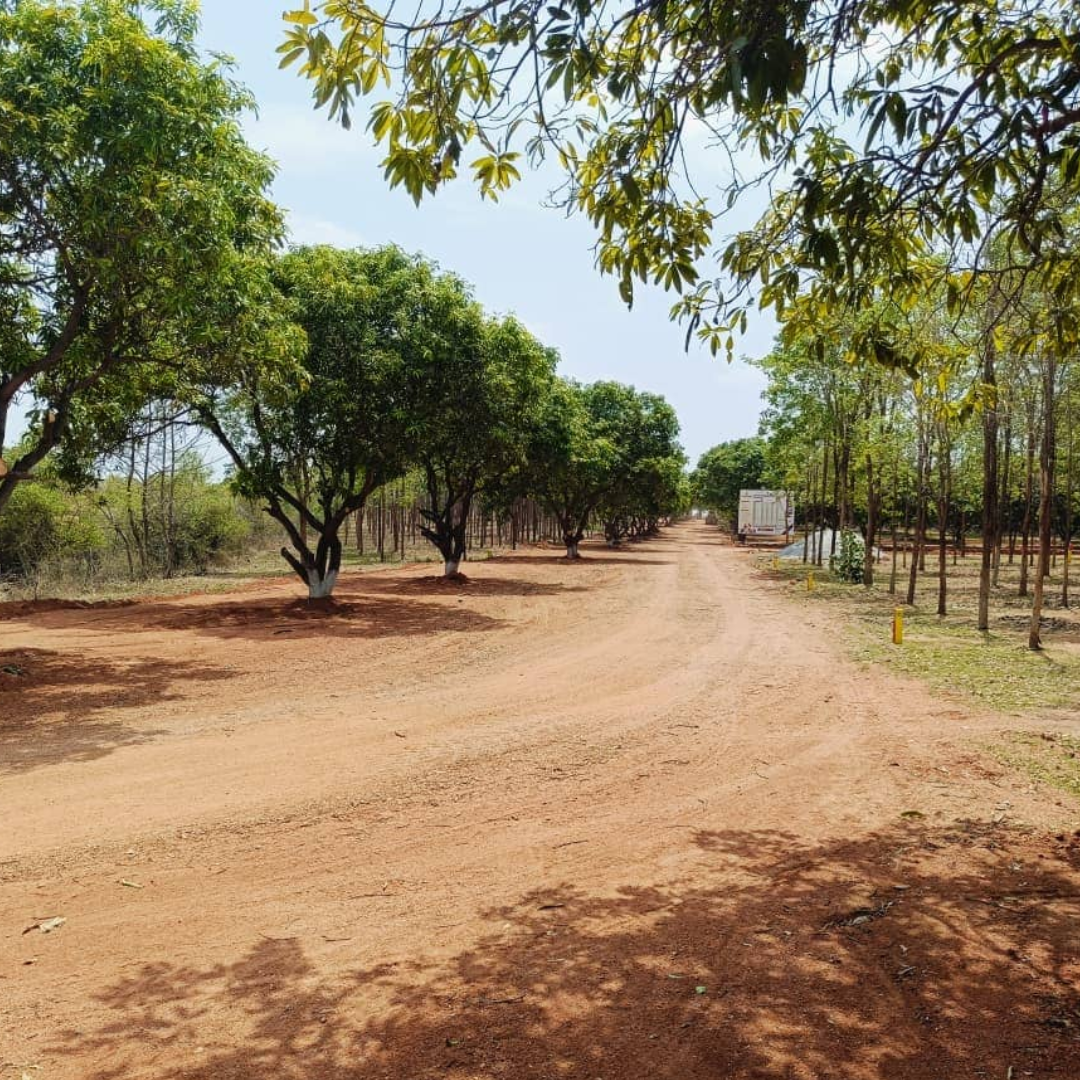 GolanukondaGolanukonda lies in Yadadri-Bhuvanagiri district near the Yadadri temple, connected to the city by the Warangal highway…Explore the corridorYadagiriguttaYadagirigutta is the temple town of the Sri Lakshmi Narasimha Swamy temple (Yadadri), whose large-scale redevelopment has…Explore the corridor
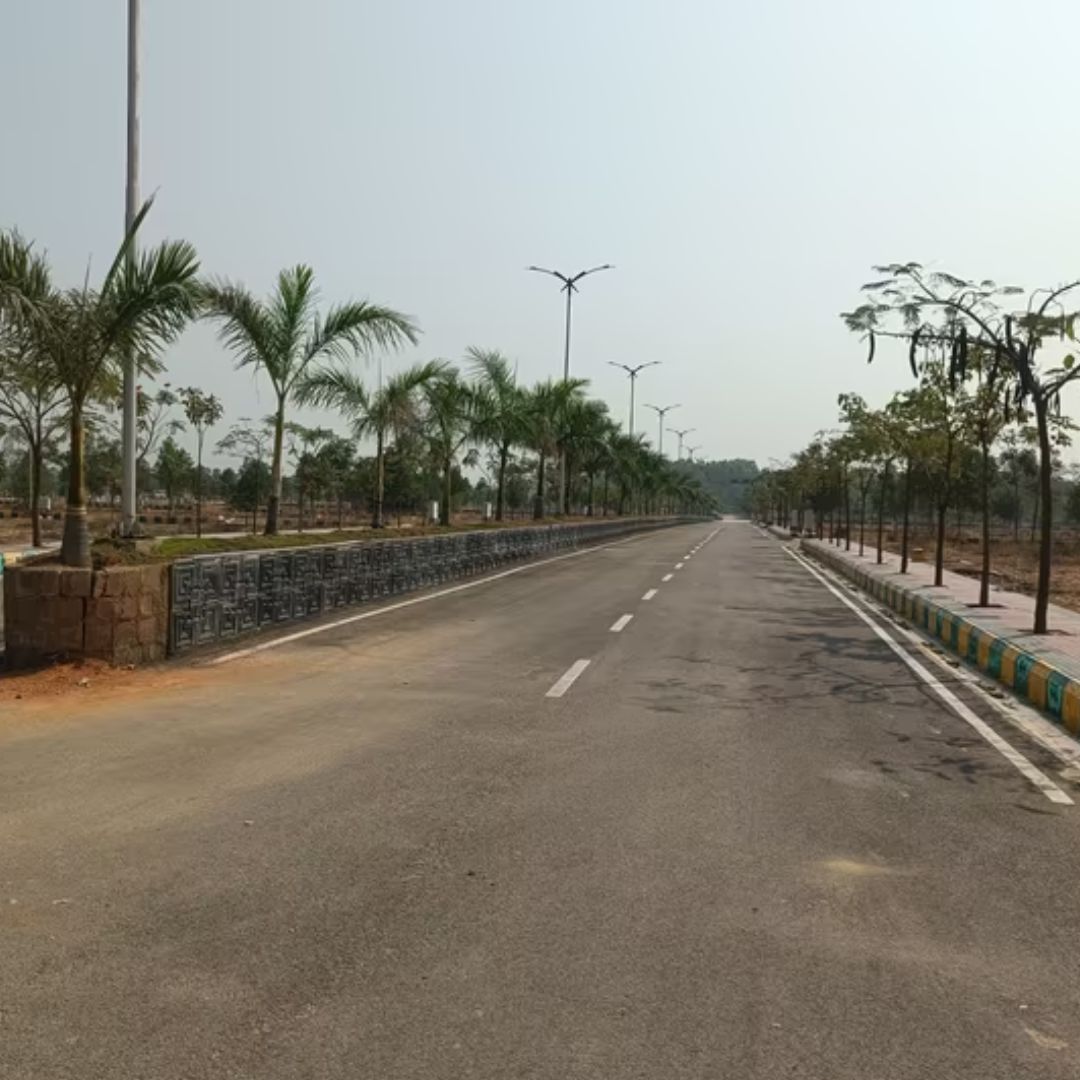 TharamathipetTharamathipet (also spelled Taramatipet) sits in Abdullapurmet mandal, Ranga Reddy district, about a kilometre from ORR Exit No…Explore the corridor
Ask BNR Infra Developers About This
Unsure how this applies to a plot you are considering? Tell us — we reply fastest on WhatsApp.
Buy Safely With BNR Infra Developers
We check the paperwork before we ever show you a plot. Ask us anything — honest answers, fast.